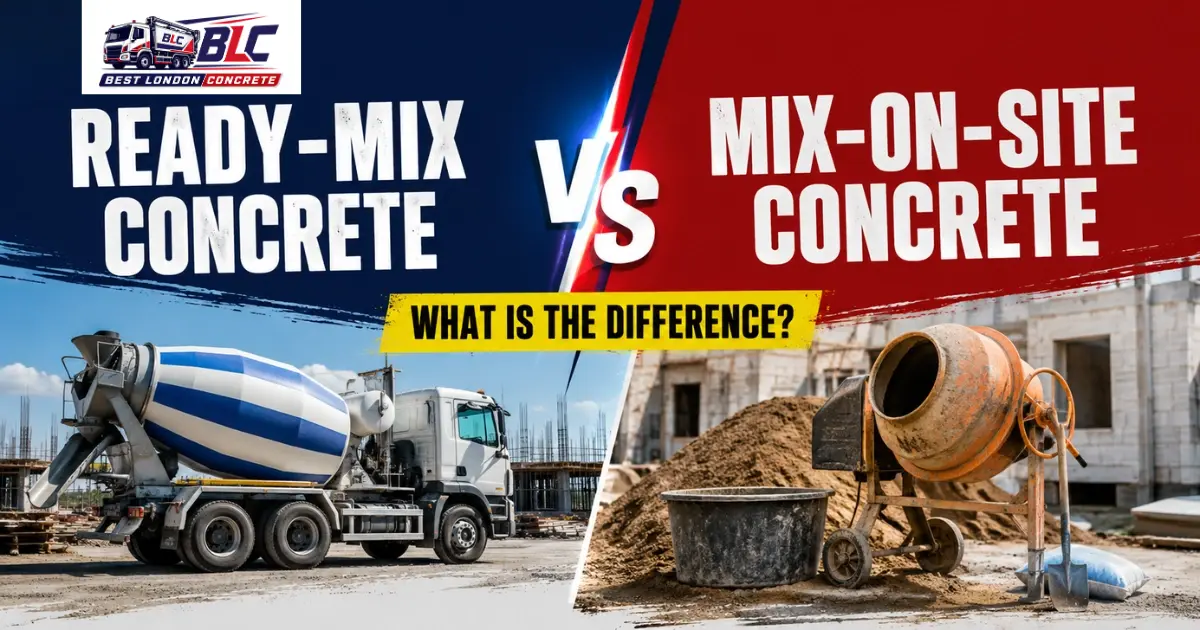
Choosing the right concrete supply method can affect your project’s cost, timing and material waste. Ready-mix concrete and mix-on-site concrete both provide fresh concrete, but they use different mixing methods.
Ready-mix concrete usually arrives after a concrete plant mixes it in advance. Mix-on-site concrete is produced at your location using a volumetric mixer truck. The truck stores the materials separately and mixes the required amount when the project needs it.
This guide explains the main differences between ready-mix concrete and mix-on-site concrete so you can choose the right option for your project.
What Is Ready-Mix Concrete?
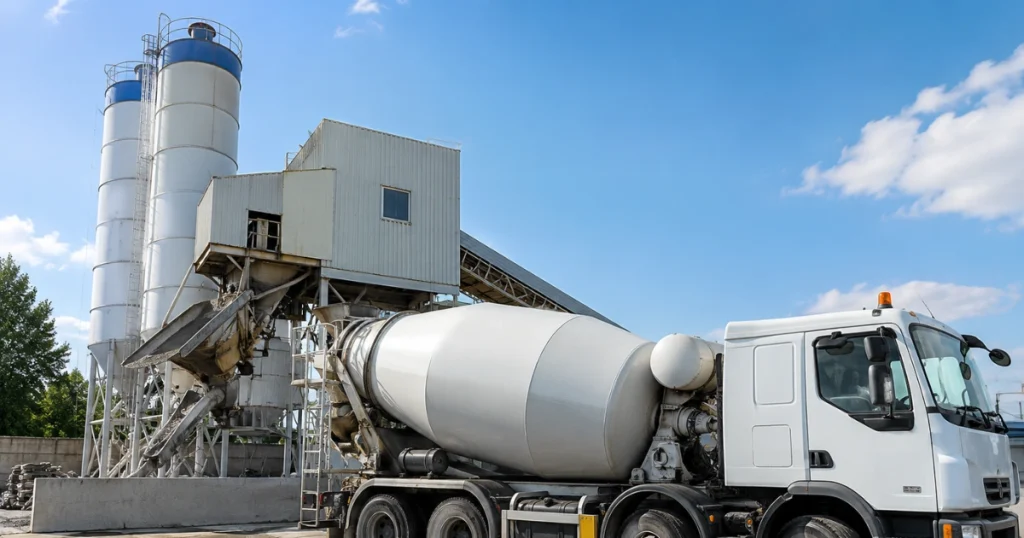
A concrete batching plant mixes ready-mix concrete before loading it into a concrete mixer truck. The truck transports the concrete to the construction site while the drum continues to turn.
The supplier normally prepares the concrete according to the required mix design and delivers a pre-ordered quantity.
Ready-mix concrete can suit projects that have clear concrete requirements and enough site access for a mixer truck.
What Is Mix-on-Site Concrete?
Mix-on-site concrete is produced at the construction site using a volumetric concrete mixer truck. The truck carries cement, sand, aggregates and water in separate compartments.
The operator selects the required concrete mix and produces the concrete as the project needs it. This process allows the supplier to adjust the quantity during the delivery.
Mix-on-site concrete can suit projects where the final quantity may change or where the work requires more than one concrete mix.
Ready-Mix Concrete vs Mix-on-Site Concrete: Key Differences
| Feature | Ready-Mix Concrete | Mix-on-Site Concrete |
| Where the concrete is mixed | A batching plant mixes the concrete before delivery. | A volumetric mixer produces the concrete at the construction site. |
| Concrete quantity | You usually order a fixed quantity before delivery. | The operator can produce the quantity that the project requires. |
| Freshness | The concrete begins its journey after the plant mixes it. | The truck produces the concrete when the work requires it. |
| Mix changes | Changing the mix after production can be difficult. | The operator can adjust the mix during the delivery when the project requires it. |
| Material waste | Ordering too much concrete may create unused material. | The supplier can reduce waste by producing the required quantity. |
| Multiple concrete mixes | The project may require separate deliveries for different mixes. | The truck can produce different mixes during the same visit when required. |
| Project flexibility | The project normally needs accurate planning before delivery. | The project can benefit from greater flexibility during the concrete pour. |
How Does Ready-Mix Concrete Work?
The supplier receives the concrete order and prepares the required mix at a batching plant. The supplier then loads the concrete into a mixer truck and transports it to the site.
The project team should prepare the site before the truck arrives because the concrete is already mixed.
The delivery process usually includes the following steps:
- The customer provides the required concrete strength, quantity and delivery location.
- The batching plant prepares the concrete according to the agreed mix.
- The supplier loads the concrete into a mixer truck.
- The truck transports the concrete to the construction site.
- The project team places and finishes the concrete after delivery.
How Does Mix-on-Site Concrete Work?
A volumetric mixer truck brings the raw materials to the construction site. The truck keeps the materials in separate sections until the operator starts production.
The operator uses the truck’s onboard system to mix the concrete and then supplies the required amount.
The process usually includes the following steps:
- The customer explains the project requirements and expected concrete quantity.
- The volumetric mixer truck arrives with the concrete materials stored separately.
- The operator selects the required concrete mix.
- The truck produces fresh concrete at the site.
- The operator continues production until the project receives the required quantity.
- The supplier can adjust the quantity if the project requires more or less concrete.
Which Option Gives You More Flexibility?
Mix-on-site concrete usually provides more flexibility because the operator produces the concrete at the construction site.
This method can help when the project team cannot predict the exact quantity before the concrete pour.
Mix-on-site concrete may offer the following benefits:
- The supplier can produce concrete according to the quantity that the project requires.
- The project may reduce unused concrete when the final quantity changes.
- The operator can provide different concrete mixes when the work requires them.
- The project team can continue the concrete pour without relying on a fixed pre-mixed load.
- The concrete is produced when the operator begins the supply process.
Which Option Can Reduce Concrete Waste?
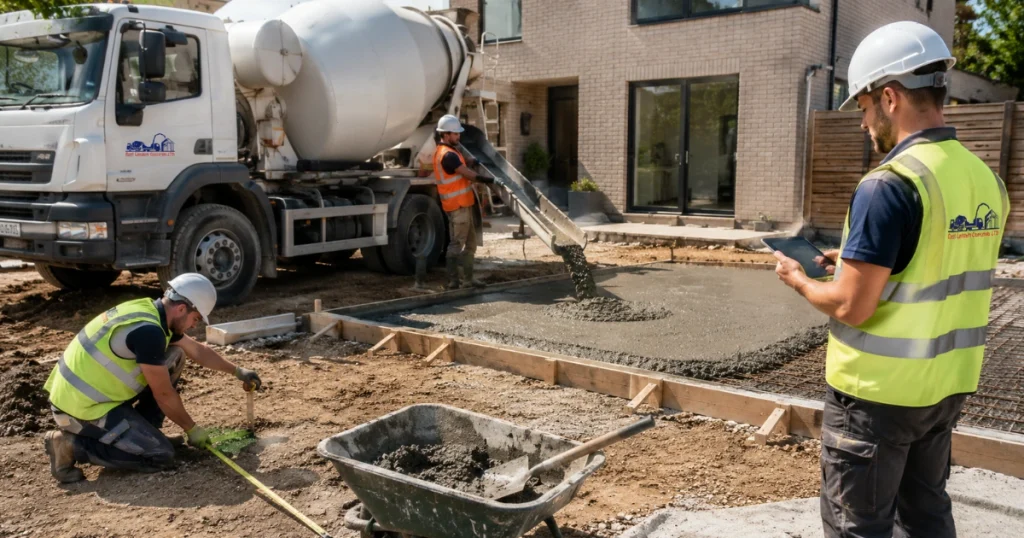
Mix-on-site concrete can help reduce waste because the supplier produces the concrete according to the amount used during the project.
When a project orders a fixed quantity of ready-mix concrete, an inaccurate estimate may leave unused concrete. Ordering too little concrete may also delay the work because the project may need another delivery.
Accurate calculations remain important for both options. The project team should measure the area carefully and discuss the required quantity with the concrete supplier.
Which Option Is Better for Small Projects?
Mix-on-site concrete can work well for small projects because small jobs may have uncertain concrete requirements.
For example, a project may need concrete for:
- A garden shed base where the ground level changes during preparation.
- A small driveway where the final dimensions differ from the original plan.
- Foundation trenches where the depth or width varies across the site.
- A concrete slab where the project team needs to adjust the quantity during the pour.
The best option depends on the site conditions, required volume and concrete specification.
Which Option Is Better for Large Projects?
Ready-mix concrete can suit large projects that require a planned quantity and a consistent concrete specification.
Large projects often use detailed drawings and accurate calculations before the concrete delivery. This planning can make it easier to order a fixed quantity.
Mix-on-site concrete can also support larger projects when the work requires flexible quantities or different concrete mixes.
Can You Use Mix-on-Site Concrete for Foundations?
Yes. Mix-on-site concrete can supply concrete for foundations and trenches.
The supplier can produce the required concrete mix at the site and provide the quantity needed for the foundation work.
Before ordering, you should confirm:
- The foundation dimensions and required concrete volume.
- The concrete strength specified for the project.
- The access available for the volumetric mixer truck.
- Whether the project requires a concrete pump.
- The date and time for the concrete delivery.
Can You Use Mix-on-Site Concrete for Driveways?
Yes. Mix-on-site concrete can supply concrete for residential and commercial driveways.
The supplier can produce fresh concrete at the site and provide the required quantity during the pour.
The project team should prepare the ground, sub-base, formwork and reinforcement before the concrete arrives.
How Do You Choose Between Ready-Mix and Mix-on-Site Concrete?
You should consider the project size, concrete quantity, site access and level of flexibility before choosing a supply method.
Ready-mix concrete may suit your project when:
- You know the exact concrete quantity before delivery.
- Your project requires one planned concrete mix.
- Your site has suitable access for a concrete mixer truck.
- Your project team can prepare the site before the concrete arrives.
Mix-on-site concrete may suit your project when:
- Your project has an uncertain concrete quantity.
- You want to reduce the risk of ordering more concrete than required.
- Your project requires different concrete mixes.
- You need fresh concrete produced at the construction site.
- Your project may require changes during the concrete pour.
What Information Should You Give a Concrete Supplier?
Providing accurate project information can help the supplier recommend the right concrete supply method.
You should provide:
- The length, width and depth of the area that requires concrete.
- The type of project, such as a foundation, slab or driveway.
- The required concrete strength or mix specification.
- The expected quantity of concrete.
- The delivery address and available site access.
- The preferred delivery date and time.
- Details about whether the project requires a line pump.
Frequently Asked Questions
Is Mix-on-Site Concrete the Same as Ready-Mix Concrete?
Both methods supply concrete for construction projects, but they use different production processes. A batching plant mixes ready-mix concrete before delivery, while a volumetric mixer produces mix-on-site concrete at the construction site.
Is Mix-on-Site Concrete Fresh?
Yes. A volumetric mixer produces the concrete at the construction site when the project requires it.
Can Mix-on-Site Concrete Reduce Waste?
Mix-on-site concrete can reduce waste because the supplier can produce the amount required during the project. Accurate measurements still help the project avoid unnecessary costs.
Is Ready-Mix Concrete Better Than Mix-on-Site Concrete?
Neither option is always better. Ready-mix concrete may suit projects with fixed quantities, while mix-on-site concrete may suit projects that require flexible quantities or different concrete mixes.
Can One Volumetric Mixer Produce Different Concrete Mixes?
A volumetric mixer can produce different concrete mixes during the same visit when the project requires them. You should discuss the required mixes with the supplier before delivery.
Do I Need a Concrete Pump?
You may need a concrete pump when the mixer truck cannot place concrete close to the required area. A line pump can move concrete through pipes to locations with difficult access.
Final Words
Ready-mix concrete and mix-on-site concrete both provide effective solutions for construction projects. The main difference is where and when the concrete is mixed.
Ready-mix concrete is produced at a batching plant before delivery. Mix-on-site concrete is produced at the construction site using a volumetric mixer truck.
If you know the exact quantity and have a planned concrete specification, ready-mix concrete may suit your project. If you need flexible quantities, fresh concrete produced on site or the option to adjust the supply, mix-on-site concrete may provide a better solution.
Before placing an order, measure the project carefully and discuss the concrete quantity, mix requirements, site access and delivery arrangements with your concrete supplier.