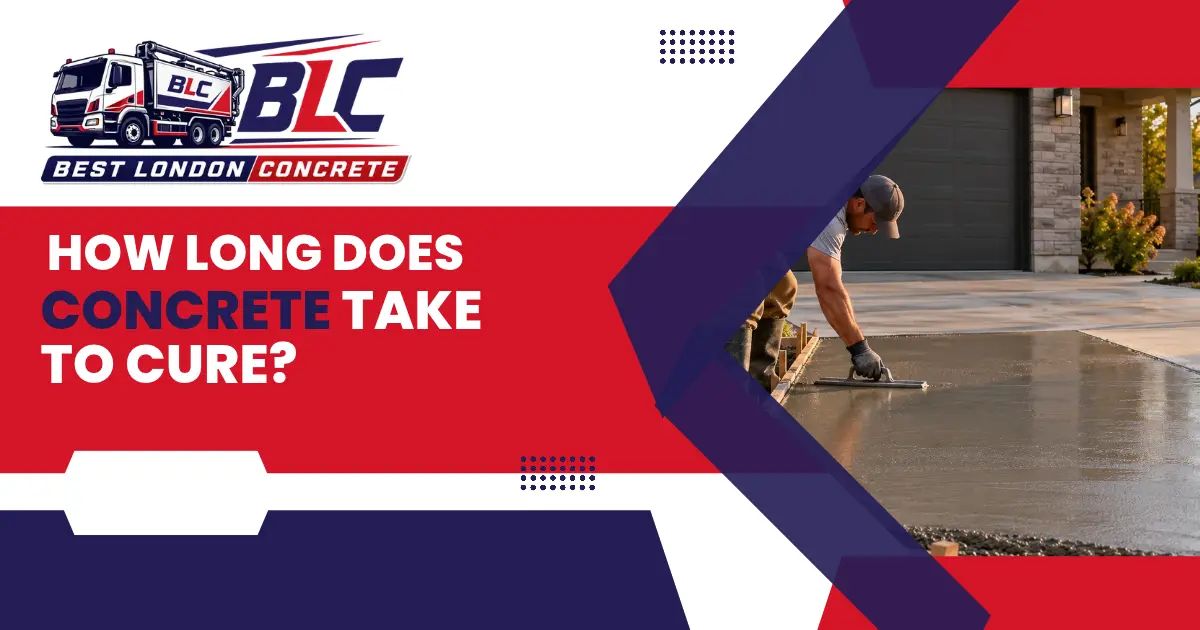
Concrete typically takes 28 days to reach its specified design strength under standard curing conditions, but you do not always need to wait 28 days before using it. You may be able to walk on a new concrete surface after 24 to 48 hours, depending on the mix, weather and site conditions. Driveways and slabs need longer before they can safely support vehicles or heavier loads.
Concrete hardens through a chemical reaction called hydration, which happens when cement reacts with water. It does not simply become strong by drying out. The concrete needs enough moisture and a suitable temperature to develop strength properly.
How Long Does Concrete Take to Cure? A Timeline
The time required depends on the concrete mix, temperature, moisture, thickness and intended use. The following timeline provides general guidance rather than a guarantee for every project.
| Time after pouring | What to expect |
| First 24 hours | Concrete begins to set and harden. Keep people and equipment off the surface while it develops enough strength. |
| 24–48 hours | Some concrete surfaces may be suitable for careful foot traffic, provided the concrete has hardened sufficiently and the conditions are suitable. |
| Around 7 days | Concrete has gained a substantial proportion of its strength. Under standard conditions, many mixes may reach around 60–75% of their 28-day strength, but actual results vary. |
| Around 28 days | Concrete is commonly assessed against its specified compressive strength at this stage. The exact strength depends on the mix and curing conditions. |
| After 28 days | Concrete can continue gaining strength as hydration continues, although the rate generally slows over time. |
Important: Do not assume a driveway is ready for a car after seven days or that every concrete slab can take heavy machinery after 28 days. Follow the supplier’s or designer’s instructions for the particular mix, slab and loading requirements.
When Can You Walk or Drive on New Concrete?
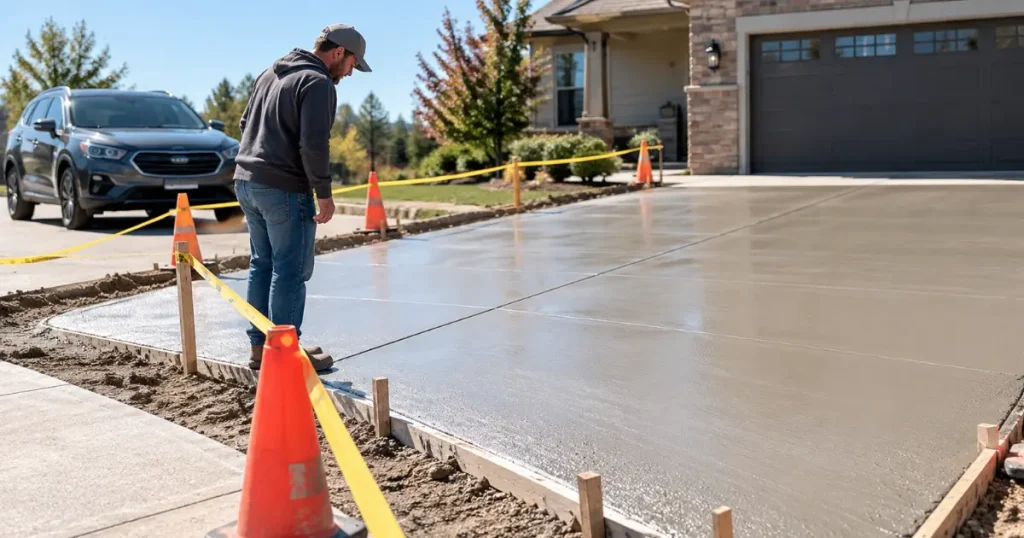
The right time to use new concrete depends on the load it must carry. Walking on a small garden path puts much less stress on it than driving a vehicle across a driveway.
When Can You Walk on Concrete?
You may be able to walk carefully on concrete after 24 to 48 hours, but the surface must have hardened enough to resist foot traffic without marking or damage. Cooler weather, a slower-setting mix or unsuitable curing conditions can extend this period.
Avoid dragging equipment, placing heavy materials or using the surface for construction work simply because it feels hard underfoot. Concrete can still be relatively weak beneath the surface during the early stages.
When Can You Drive on a New Concrete Driveway?
A new concrete driveway needs more time to gain strength than a surface intended only for pedestrians. Some domestic driveways may be ready for light vehicles after around seven days, while others need longer. The correct waiting period depends on the concrete specification, slab thickness, ground preparation, temperature and vehicle weight.
Heavy vans, lorries and machinery place greater loads on concrete and may require a longer waiting period or specific approval. If the driveway has been designed for heavier vehicles, follow the designer’s instructions rather than relying on a general curing timeline.
When Can You Place Heavy Loads on Concrete?
Do not place heavy equipment, building materials or machinery on new concrete until it has developed the strength required for those loads. The 28-day strength assessment is an important reference point, but it does not automatically confirm that a particular slab can support heavy loads.
The slab design, reinforcement, support beneath the concrete and the size and position of the load all affect its capacity.
What Is the Difference Between Concrete Setting, Curing and Drying?
These terms describe different stages, and understanding them helps you avoid using concrete too early.
- Setting: The concrete changes from a workable mixture into a material that holds its shape. Initial setting can happen within hours, depending on the mix and conditions.
- Curing: The concrete is kept under suitable moisture and temperature conditions so cement hydration can continue and strength can develop.
- Drying: Moisture gradually leaves the concrete. Drying is particularly important before installing floor finishes, but it is not the same as strength development.
Concrete can feel dry and hard while it is still gaining strength. Allowing the surface to dry too quickly can interfere with hydration and increase the risk of surface defects.
What Factors Affect Concrete Curing Time?
Concrete does not cure at exactly the same rate on every site. Temperature, moisture, the mix design and the conditions after pouring all affect how quickly it develops strength.
1. Temperature and Weather
Concrete generally gains strength faster in warmer conditions and more slowly in cold weather. A suitable temperature helps hydration progress, while very low temperatures can delay strength development and may damage fresh concrete if it freezes.
Hot, dry or windy conditions can cause surface moisture to evaporate quickly. This increases the risk of plastic shrinkage cracking, especially before the concrete has properly hardened.
In the UK, plan concrete deliveries around the forecast where possible. Protect fresh concrete from frost, strong winds, direct heat and rapid moisture loss.
2. Moisture and Curing Protection
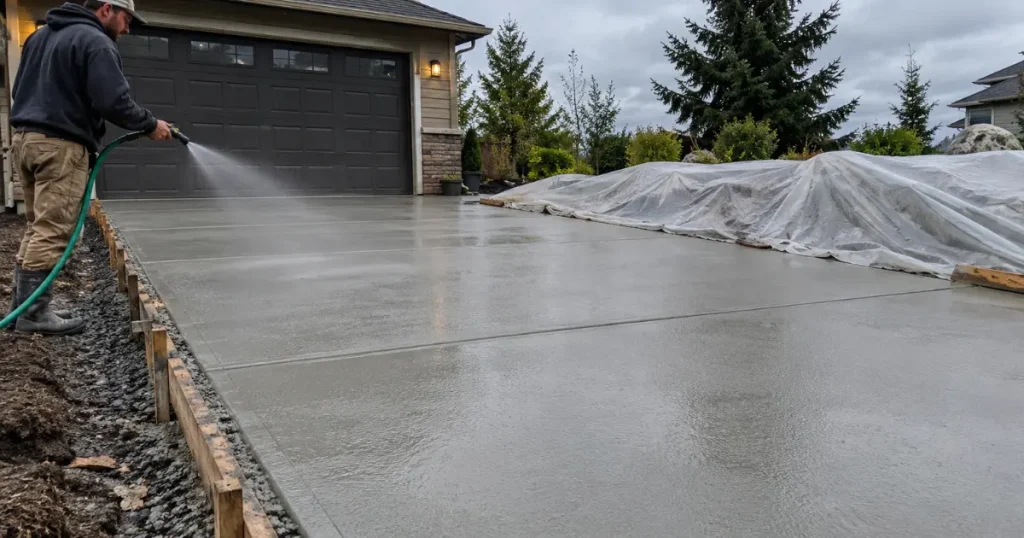
Concrete needs moisture for cement hydration. If the surface dries too early, strength development and surface durability can suffer.
Depending on the project and conditions, suitable curing methods may include:
- Covering the surface with polythene sheets: This helps reduce moisture loss when the cover is applied carefully and does not damage the fresh finish.
- Using wet curing blankets or hessian: These can help maintain moisture when kept suitably damp and managed correctly.
- Applying a curing compound: A suitable product forms a layer that reduces evaporation from the concrete surface.
- Using controlled water curing: This can help maintain moisture where the concrete and site conditions allow it.
Follow the specified curing method and duration. Keeping concrete adequately moist during the early curing period is important, but the best method depends on the surface finish, weather and intended use. Avoid blasting fresh concrete with water or using a method that damages the surface.
3. Concrete Mix and Cement Type
Different concrete mixes develop strength at different rates. Some mixes gain early strength quickly, while others develop strength more gradually.
The cement type, water-to-cement ratio, admixtures and other mix ingredients can all affect setting and strength development. Do not assume that C20, C25 and C30 concrete will all reach the same percentage of their final strength at exactly the same time.
4. Slab Thickness and Ground Conditions
The thickness of a concrete slab affects how it gains and loses heat and moisture. Ground conditions also matter because a poorly prepared or unstable base can cause movement and cracking, even if the concrete has been allowed to cure properly.
For driveways, foundations and structural slabs, the concrete grade, thickness, reinforcement where required and sub-base preparation should all suit the intended loads.
Frequently Asked Questions
Does concrete take 28 days to dry?
No. The 28-day period is a standard age for assessing concrete’s specified compressive strength, not a fixed drying time. Concrete can still contain moisture after 28 days, and hydration can continue for much longer.
Does concrete get stronger after 28 days?
Yes. Concrete can continue to gain strength after 28 days, as hydration continues. The rate usually slows over time, and the amount of additional strength depends on the mix and curing conditions.
Can it rain on freshly poured concrete?
Rain can damage fresh concrete if it falls heavily before the surface has set, potentially washing out cement paste or spoiling the finish. Once the surface has hardened sufficiently, rain is less likely to cause this type of damage. Protect fresh concrete from heavy rain where necessary.
Can concrete cure in cold weather?
Yes, but cold weather slows strength development. Fresh concrete must be protected from freezing, and the curing plan may need to be adjusted to suit the temperature and mix.
Should you water concrete while it cures?
Maintaining suitable moisture can help concrete develop strength and durability. However, the method matters. Use an appropriate curing method and avoid applying water in a way that washes out or damages the fresh surface.
When can you remove concrete formwork?
The timing depends on the concrete’s strength, the type of formwork, the element being cast, the temperature and the loads involved. Follow the project specification or responsible professional’s instructions rather than using a fixed number of days for every job.