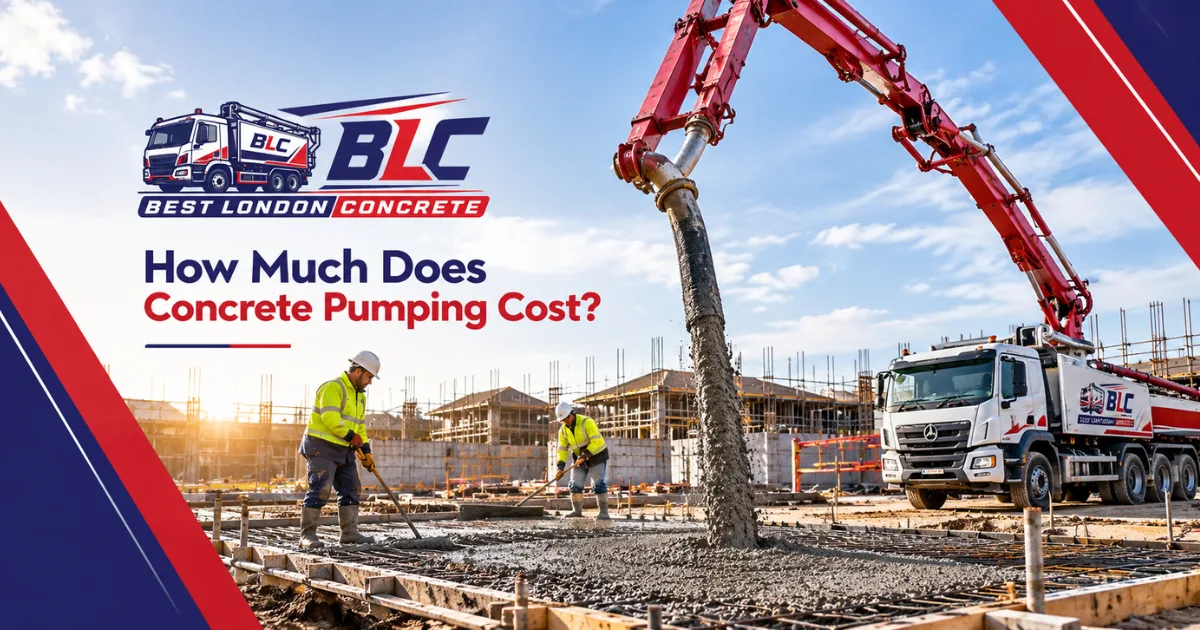
Concrete pump hire in the UK typically costs around £280 to £800 per day, depending on the type of pump, project size and site requirements. A ground line pump generally costs less than a boom pump, while larger or more complex projects can cost more.
Line pump hire cost will be at around £280–£300 per day and boom pump hire at around £550–£800 per day. Some concrete pumping companies instead quote a fixed price for a shorter visit, often covering around three to four hours on site.
The final cost can also depend on pumping distance, additional pipework, access, waiting time and the amount of concrete you need to place.
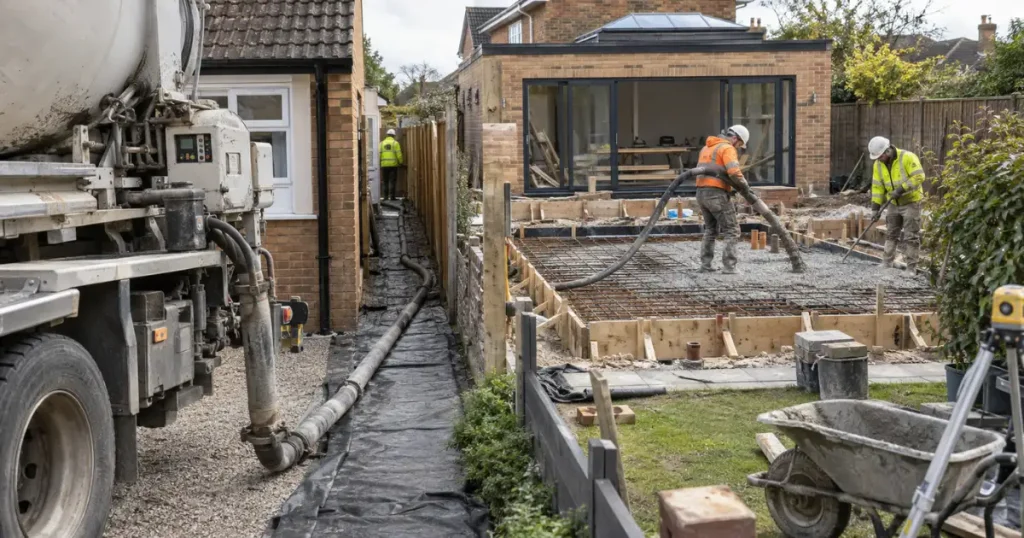
How Much Does a Concrete Line Pump Cost?
A concrete line pump typically costs around £280–£600 per day or visit, depending on the supplier and project requirements.
Line pumps work well for projects where concrete needs to travel horizontally or through restricted access areas. Common applications include:
- It can deliver concrete to driveways where the mixer truck cannot reach the entire pouring area.
- It can move concrete through narrow side passages and garden access routes.
- It can supply concrete for patios, garden rooms and house extensions.
- It can reach foundation trenches located away from the delivery vehicle.
- It can help place concrete behind properties where direct truck access is difficult.
Some suppliers include the operator and a set length of delivery pipe within the hire price, while additional pipework or longer pumping distances can increase the cost.
How Much Does a Boom Pump Cost?
A concrete boom pump generally costs around £550–£800 per day, although the price can increase for larger or more specialised projects. Like £550 for a 19-metre boom pump and £770 for a 24-metre boom pump.
A boom pump uses a hydraulic arm to position the concrete delivery hose over obstacles and across larger distances. Boom pumps can suit:
- It can reach upper floors and elevated construction areas.
- It can deliver concrete over walls and other obstacles.
- It can support larger concrete pours where rapid placement matters.
- It can work on commercial construction sites with suitable access.
- It can help when a ground line pump cannot provide the required reach.
The available reach depends on the specific pump, so you should confirm the required horizontal and vertical distance before booking.
Concrete Pump Cost by Pump Type
| Pump Type | Cost | Common Applications |
| Line Pump | £280–£600 | Driveways, foundations, patios and restricted-access projects |
| Boom Pump | £550–£800+ | Large pours, upper floors and projects requiring greater reach |
| Specialist Pumping | £800–£1,000+ | Larger or more complex projects with additional requirements |
Note: Suppliers may charge by the day, half day or individual visit, and the price can change according to the site and pumping requirements.
What Is Included in Concrete Pump Hire?
What you receive for the quoted price depends on the supplier. A concrete pump hire package may include:
- The concrete pump and a trained pump operator.
- Standard amount of delivery pipe or hose with a line pump.
- Ppump setup and basic preparation before the concrete pour.
- Set period of pumping time within the quoted rate.
- Guidance about pump positioning and site access.
You should always ask what the quotation includes before booking the pump.
For example, some operated line pump services include the operator and up to a specified length of pipe, while additional requirements may carry extra charges.
What Affects the Cost of Concrete Pumping?
Several factors can change the final price of concrete pump hire.
Type of Pump
The pump type has one of the biggest effects on the cost.
A line pump generally costs less than a boom pump and can suit many domestic projects. A boom pump costs more but can provide greater reach for difficult or elevated pours.
Pumping Distance
The distance between the pump and the concrete placement area can affect the amount of pipe or hose required.
Longer pumping distances may require additional pipework and can increase the overall cost.
Some line pump services include around 40 metres of line, while longer distances may require additional arrangements.
Site Access
Restricted access can affect the type of pump you need.
A line pump can work well when the pump unit can position near the site and the concrete needs to travel through a hose or pipe.
A boom pump may suit projects where the pump needs to reach over walls, buildings or other obstacles.
Amount of Concrete
The amount of concrete can affect how long the pump needs to remain on site.
A small driveway pour may require less pumping time than a large foundation or commercial slab.
You should coordinate the concrete delivery and pump booking so the pump remains available throughout the planned pour.
Time on Site
Some suppliers include a set period within the hire price and charge additional fees if the pump remains on site longer.
Waiting for concrete deliveries, site preparation problems or slow placement can increase the total cost.
Are There Additional Concrete Pumping Charges?
The advertised pump hire price may not cover every possible cost.
You should ask about:
Additional Pipework
A standard line length may form part of the hire price. If the concrete needs to travel further, the supplier may charge for additional pipe or hose.
Waiting Time
Pump hire often includes a set period on site. If the concrete delivery arrives late or the site is not ready, additional waiting or overtime charges may apply.
Some additional hourly rates around £60–£90 per hour, although rates vary between suppliers.
Cleaning and Washout
Concrete pumping equipment needs proper cleaning after use. Some suppliers include cleaning within the hire price, while others may apply separate charges.
Priming Materials
Some line pump systems require cement or another suitable material to prime the pump before concrete enters the delivery line. The exact requirements depend on the equipment and supplier.
Fuel and Transport
Some suppliers include transport and fuel in the quoted price, while others list them separately.
Always ask for a complete quotation before confirming the booking.
How Much Does Concrete Pumping Cost for a Driveway?
A driveway may require a line pump when the concrete mixer cannot reach the full pouring area.
A typical line pump hire can fall within the £280–£600 range, depending on the supplier, location, pumping distance and time required.
The concrete itself costs separately from the pump hire.
For example, your total project cost may include:
Concrete + Delivery + Pump Hire + Additional Services
You should ask the supplier for the complete delivered and pumped price rather than comparing the pump rate alone.
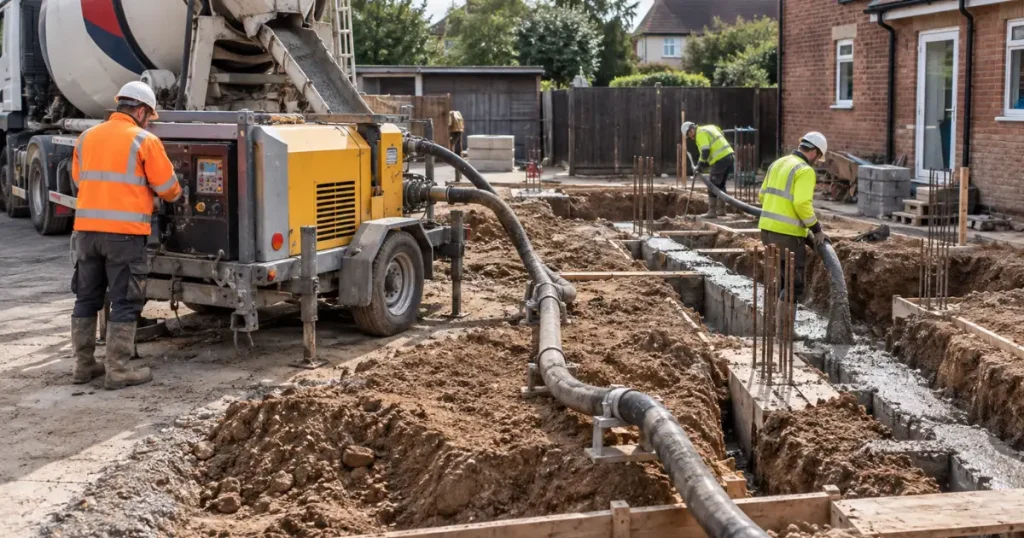
How Much Does Concrete Pumping Cost for Foundations?
Foundation projects can require concrete pumping when trenches sit behind a property or away from the concrete mixer.
A line pump can move concrete through connected pipes to reach foundation trenches that the mixer truck cannot access directly.
Cost is round £300–£400 per day for concrete pump hire, although actual prices depend on the project and supplier. The final cost can depend on:
- The foundation layout can affect how much pipework the pump needs.
- The distance between the mixer and foundation trenches can affect the pumping setup.
- Restricted access can affect the pump position.
- The total concrete volume can affect the pumping time.
- Site preparation can affect how quickly the concrete team can complete the pour.
When Do You Need a Concrete Pump?
You may need a concrete pump when the mixer truck cannot discharge concrete directly into the required area.
A pump can help when:
- The concrete needs to travel through a narrow side passage.
- The project has a long distance between the road and pouring area.
- The concrete needs to reach a rear garden.
- A building or wall prevents direct truck access.
- Foundation trenches sit away from the delivery vehicle.
- The project requires concrete on an upper floor.
- The site layout makes wheelbarrow transport impractical.
You do not necessarily need a pump for every concrete delivery. If the mixer truck can safely discharge directly into the prepared area, you may not need additional pumping equipment.
How Can You Keep Concrete Pumping Costs Down?
Good preparation can help you avoid unnecessary pump charges.
You should:
- Confirm the required pump type before the delivery date.
- Measure the distance from the proposed pump position to the concrete placement area.
- Tell the supplier about narrow access, walls, buildings and other obstacles.
- Make sure the site is ready before the pump arrives.
- Prepare the formwork, reinforcement and ground before the concrete delivery.
- Make sure enough workers are available to place and level the concrete.
- Coordinate the concrete delivery time with the pump booking.
- Ask whether pipework, cleaning, transport and waiting time form part of the quotation.
Is Concrete Pumping Worth the Cost?
Concrete pumping can make a project easier when direct concrete delivery is difficult.
A pump can reduce the amount of manual handling required and allow the team to move concrete directly to the required pouring area.
For a difficult-access project, the cost of pump hire may also help the team complete the pour more efficiently than relying on wheelbarrows or other manual methods.
The value depends on the site layout, concrete volume, labour requirements and project schedule.
What Should You Ask Before Hiring a Concrete Pump?
Before confirming your booking, ask the supplier to explain the complete cost. You should confirm:
- Ask which type of pump suits your project.
- Confirm how long the quoted hire period lasts.
- Ask how much pipe or hose the price includes.
- Confirm the maximum pumping distance for the proposed setup.
- Ask whether an operator is included.
- Confirm whether transport and setup charges apply.
- Ask about additional hourly or waiting charges.
- Confirm whether cleaning and washout charges apply.
- You should provide details about site access and obstacles.
- You should ask for the total quotation before booking.
Frequently Asked Questions
How Much Does Concrete Pumping Cost in the UK?
Concrete pump hire commonly costs around £280–£800 per day, depending on the pump type and project requirements. Line pumps generally cost less than boom pumps.
How Much Does a Line Pump Cost?
A line pump can cost around £280–£600 per day or visit, although the exact price depends on the supplier, pumping distance, included pipework and time on site.
How Much Does a Boom Pump Cost?
A boom pump generally costs around £550–£800 per day, although larger or specialist projects can cost more.
Does Concrete Pump Hire Include an Operator?
Many operated concrete pump services include a trained pump operator, but you should confirm this before booking because hire terms vary between suppliers.
Does Concrete Pump Hire Include the Concrete?
No. Pump hire and concrete supply are normally separate costs unless the supplier provides a combined concrete and pumping quotation.
Do I Need a Pump for a Driveway?
You may need a pump if the concrete mixer cannot reach the driveway or pouring area directly. A line pump can help move concrete through narrow or difficult-access areas.
Can a Line Pump Reach 100 Metres?
Some line pump systems can pump concrete up to approximately 100 metres, but the achievable distance depends on the equipment, pipe arrangement and concrete mix.
What Is Cheaper, a Line Pump or a Boom Pump?
Line pumps generally have lower hire rates than boom pumps. However, the cheaper option depends on whether the equipment can actually reach your pouring area.
Final Words
Concrete pumping costs in the UK generally range from around £280 for a basic line pump hire to £800 or more for a boom pump, depending on the equipment and project requirements.
A line pump can provide a practical solution for driveways, foundations, patios and other difficult-access projects. A boom pump can provide greater reach for elevated, large-scale or obstructed pours.
When comparing prices, look beyond the headline pump rate. Check what the quotation includes for the operator, pipework, setup, transport, pumping time, cleaning and any additional charges.
For an accurate price, provide the concrete supplier with your concrete quantity, pumping distance, site access, delivery location and project requirements. This allows the supplier to recommend the appropriate pump and provide a project-specific quotation.