C20, C25 and C30 concrete differ mainly in their compressive strength, which affects the loads they can support when properly designed, placed and cured. C20 is generally used for lighter-duty applications, C25 is common for domestic concrete work, and C30 is often selected for applications that need greater strength and durability.
The right grade depends on what you are building, how much weight the concrete must support and the conditions it will face. Choosing a higher grade does not automatically make a project better. You need concrete that meets the project’s actual requirements.
What Do C20, C25 and C30 Mean?
The numbers in these concrete grades refer to their characteristic compressive strength, measured in megapascals (MPa) at 28 days under specified testing conditions.
- C20 concrete: Has a characteristic compressive strength of 20 MPa.
- C25 concrete: Has a characteristic compressive strength of 25 MPa.
- C30 concrete: Has a characteristic compressive strength of 30 MPa.
Under the standard European concrete classification, the full strength classes are commonly written as C20/25, C25/30 and C30/37. The first number represents cylinder strength, while the second represents cube strength. Suppliers and customers often use the shorter names C20, C25 and C30 when discussing concrete orders.
These grades describe strength, not the complete mix design. Workability, exposure conditions, cement content and other specification requirements also affect which concrete is suitable for a job.
C20 vs C25 vs C30 Concrete: Mian Differences
| Feature | C20 concrete | C25 concrete | C30 concrete |
| Characteristic cylinder strength | 20 MPa | 25 MPa | 30 MPa |
| Typical strength level | Lower | Medium | Higher |
| Common applications | Suitable for certain light-duty and general applications | Common in domestic concrete work | Suitable for applications requiring greater specified strength |
| Potential uses | Paths, light-duty bases and some non-critical concrete work, where specified | Domestic slabs, driveways and foundations, where the design allows | Heavier-duty slabs, structural applications and some commercial projects, where specified |
| Relative material cost | Often lower | Often moderate | Often higher |
| Best choice | Where the specification permits C20 | Where the project requires C25 | Where the project requires C30 |
These applications are general examples, not universal rules. A structural designer or project specification should determine the required grade, particularly for foundations, load-bearing elements and concrete exposed to aggressive conditions.
What Is C20 Concrete Used For?
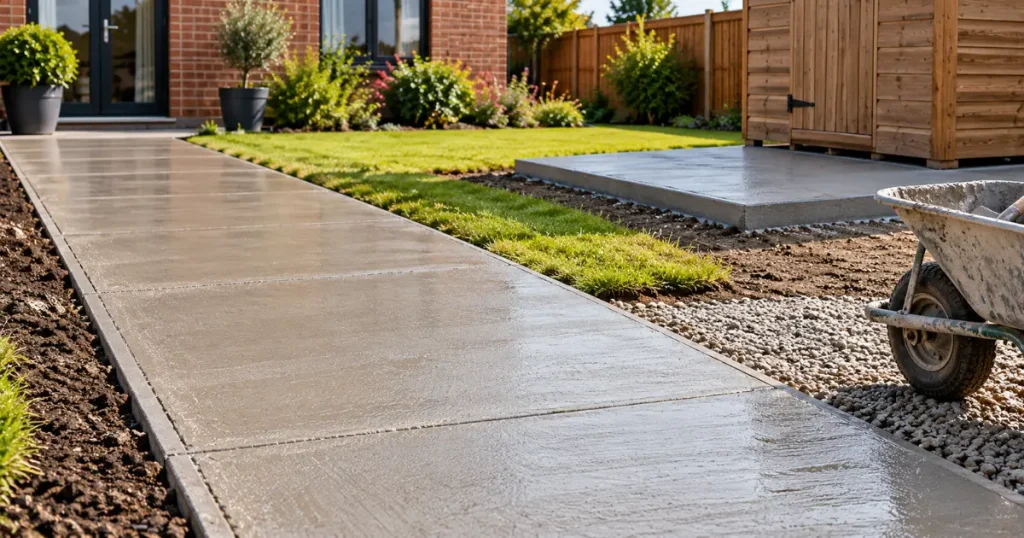
C20 concrete is used for certain light-duty applications where the required strength and exposure conditions allow it. It may be suitable for paths, small bases and other general concrete work, depending on the design.
Before choosing C20 concrete, consider the following:
- The intended load: Check that the concrete specification suits the weight and use of the finished surface.
- Ground conditions: Poor ground preparation or settlement can cause cracking even when the concrete grade is appropriate.
- Exposure to weather: The mix must meet the relevant requirements for its environment, including any freeze-thaw or other durability risks.
- The project specification: Do not substitute C20 for a specified higher grade without approval.
C20 should not be selected simply because it costs less. If the project needs greater strength or a specific durability performance, a different concrete specification may be necessary.
What Is C25 Concrete Used For?
C25 concrete is commonly used for domestic construction projects where the design calls for this strength class. Depending on the specification, it may be suitable for driveways, concrete slabs, paths and certain foundations.
C25 can be a practical option for homeowners because many everyday projects do not automatically require a higher-strength mix. However, the correct grade depends on the loads, ground conditions, thickness, reinforcement and exposure requirements.
Before ordering C25 concrete:
- For a driveway, consider the vehicles that will use it, the sub-base, drainage and slab thickness.
- For a concrete slab, confirm whether the slab is a simple ground-bearing surface or part of a structural design.
- For foundations, follow the foundation design and any requirements set by the building designer or structural engineer.
- For outdoor use, make sure the concrete specification provides the durability needed for the site conditions.
C25 is not automatically suitable for every domestic project. Always check the specified grade before placing an order.
What Is C30 Concrete Used For?
C30 concrete is used where a project requires a higher compressive strength than C20 or C25 can provide. It may be specified for heavier-duty slabs, structural concrete and commercial construction, depending on the design.
The higher strength can be useful, but it does not remove the need for proper ground preparation, reinforcement where required, correct placement and curing.
C30 may be appropriate when:
- The design specifies a higher strength class to meet the required structural performance.
- The concrete must support particular loads that require a C30 mix under the project’s design.
- The project specification requires C30 for a structural element or other defined application.
- The exposure conditions require a particular concrete specification, although strength grade alone does not guarantee adequate durability.
For structural work, the required concrete class must come from the design or specification. Do not assume that C30 is the correct choice simply because the project is larger or more expensive.
Which Concrete Grade Is Best for a Driveway?
C25 may be suitable for many domestic driveways, while C30 may be appropriate where the design or expected loading requires a higher strength class. The correct choice depends on more than the grade alone.
Consider these factors before ordering driveway concrete:
- Vehicle weight: A driveway used by cars may have different requirements from one regularly used by vans, delivery vehicles or heavier vehicles.
- Slab thickness: The concrete must have the specified thickness to perform as intended.
- Ground preparation: A properly prepared and compacted sub-base helps support the slab and reduces the risk of movement.
- Drainage: Water should drain appropriately rather than collecting on or around the concrete.
- Reinforcement and joints: Where the design requires reinforcement or movement-control joints, these must be installed correctly.
Ask your concrete supplier about the available grades, but use the project specification to decide which grade to order. A stronger mix cannot compensate for an unsuitable slab design or poorly prepared ground.
Which Concrete Grade Is Best for Foundations?
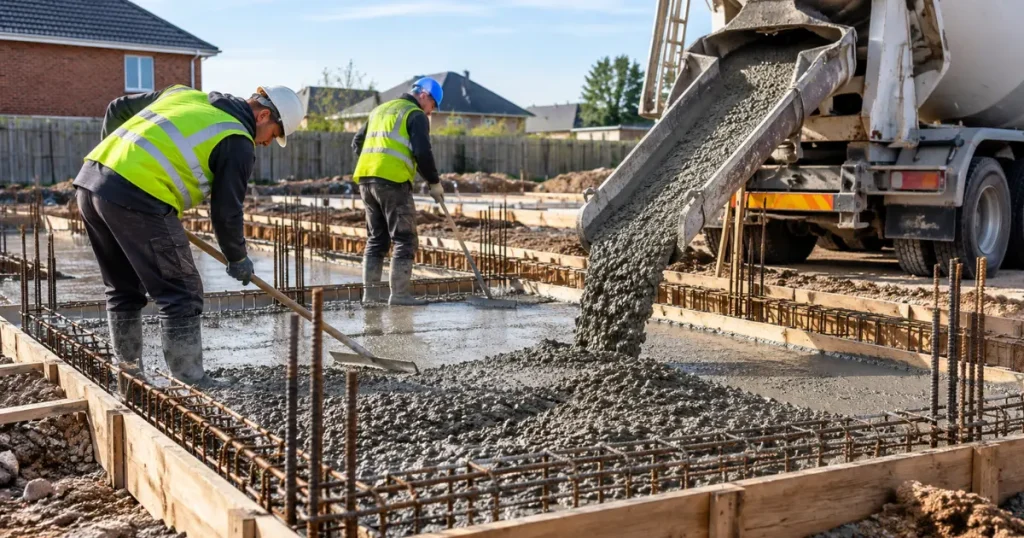
The best concrete grade for foundations depends on the building design, ground conditions, structural loads and the environment surrounding the concrete. C25 or C30 may be specified for different foundation projects, but neither grade is universally correct.
Foundation concrete must meet the requirements of the structural design and relevant building standards. Ground conditions can also affect the required mix, particularly where the soil or groundwater may expose the concrete to aggressive substances.
Before ordering foundation concrete:
- Check the concrete grade stated on the structural drawings or specification.
- Confirm the required volume from the foundation dimensions.
- Check whether the design requires reinforcement or other special provisions.
- Tell the supplier about any specified workability, durability or exposure requirements.
- Arrange delivery so the prepared foundations can be filled and the concrete placed without unnecessary delays.
If the drawings specify C30, do not replace it with C25 simply to reduce costs. Confirm any proposed change with the responsible designer first.
Can You Use C30 Instead of C20 or C25?
You can sometimes use a higher-strength concrete grade where the design permits it, but it is not always necessary or appropriate. A higher grade may increase the material cost without providing a useful benefit for the intended application.
Changing the grade can also affect other aspects of the mix specification, including workability and placing requirements. For structural concrete, any substitution should be approved by the responsible designer.
Choose the grade that meets the project’s requirements rather than automatically ordering the strongest option.
Frequently Asked Questions
Is C25 concrete stronger than C20?
Yes. C25 has a higher characteristic compressive strength than C20. Under the full standard strength-class designations, these are commonly C25/30 and C20/25 respectively.
Is C30 concrete stronger than C25?
Yes. C30 has a higher characteristic compressive strength than C25. However, the suitability of either grade depends on the project specification, loading and exposure conditions.
Can I use C20 concrete for a driveway?
C20 may be suitable for some light-duty applications, but you should not assume it is appropriate for every driveway. Check the required grade against the vehicle loads, slab design, ground preparation and site conditions.
Is C30 concrete always better than C25?
No. C30 offers a higher strength class, but the project may not need it. The correct choice is the grade that meets the design and durability requirements without unnecessary cost.
How long does C20, C25 or C30 concrete take to reach its strength?
Concrete continues to gain strength as it cures. The characteristic strength class is generally assessed at 28 days under specified test conditions, although the actual rate of strength development depends on the mix and curing conditions. Concrete can become firm enough to handle well before it reaches its specified 28-day strength.